The Rise of Agentic AI: How Autonomous WhatsApp Agents Are Transforming Customer Service in 2026
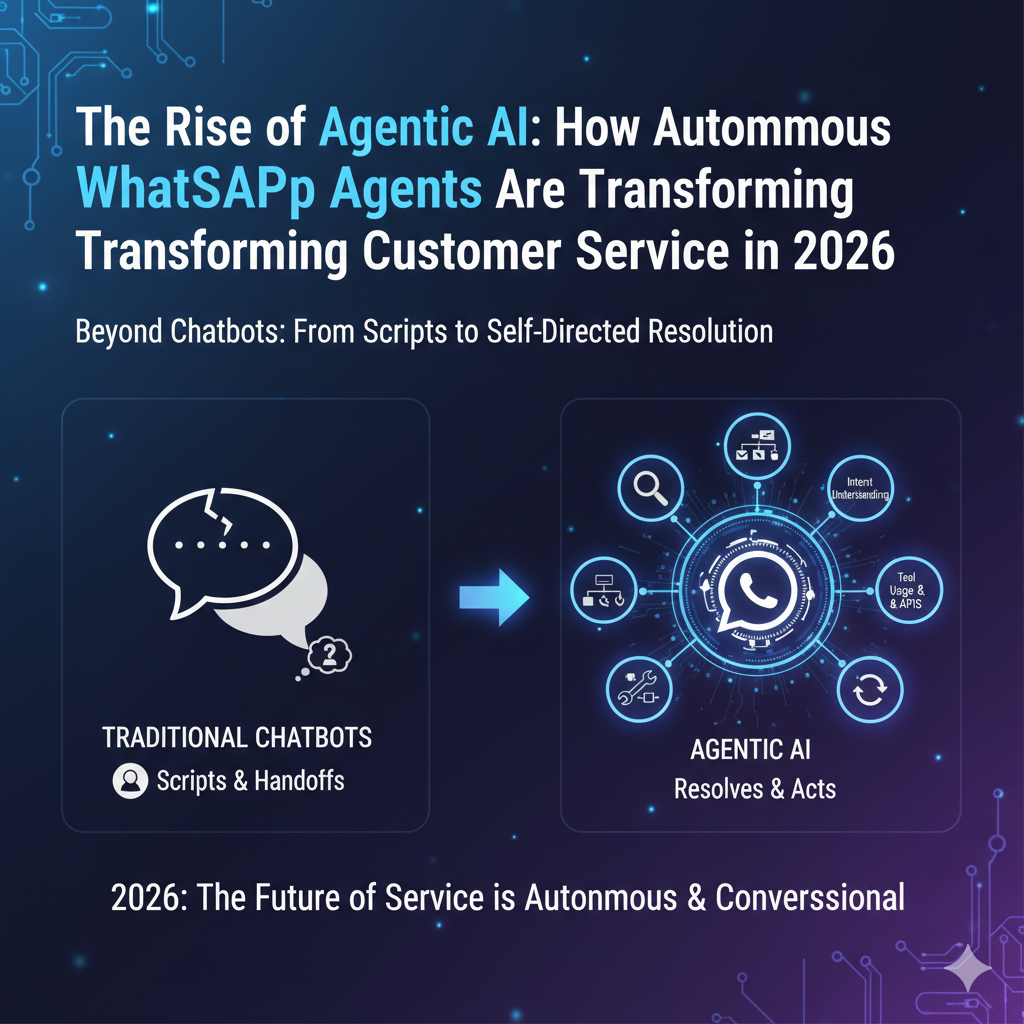
From Chatbots to Agentic AI: What Changed?
Traditional customer service automation relied on:
- Predefined flows
- Keyword matching
- Human intervention for most decisions
Agentic AI introduces a fundamental shift.
Instead of asking “What reply should I send?”, agentic systems ask:
“What is the customer trying to achieve—and what action completes it?”
This makes the AI an actor, not just a responder.
What Makes AI “Agentic” in 2026?
An agentic AI system has four defining traits:
- Goal Awareness – Understands the customer’s objective
- Decision Autonomy – Chooses actions without hard-coded rules
- Tool Usage – Can trigger APIs, fetch data, and execute workflows
- Self-Correction – Adjusts based on outcomes and feedback
On WhatsApp, this means the AI doesn’t just chat—it resolves.
Why WhatsApp Became the Agentic AI Battlefield
WhatsApp is uniquely suited for agentic AI because it is:
- Conversational by default
- Transactional (orders, payments, updates)
- Asynchronous but fast
- Trusted for support and confirmations
By 2026, most D2C customers expect issues to be solved inside WhatsApp, not redirected to portals or tickets.
How Autonomous WhatsApp Agents Work in Practice
1. Intent Understanding Beyond Keywords
Agentic AI combines:
- Message context
- Past conversations
- Order and account data
- Behavioral signals
This allows it to distinguish between:
- A delivery delay complaint
- A payment hesitation
- A return eligibility check
Each requires a different action, not just a reply.
2. Decision-Making in Real Time
Instead of escalating everything, the agent decides:
- Can this be resolved automatically?
- Is verification required?
- Does this need human approval?
Most queries never reach a human.
3. Action Execution Inside WhatsApp
Autonomous agents can:
- Check order status
- Trigger refunds or replacements
- Confirm COD orders
- Update delivery preferences
- Apply predefined policies
The conversation ends with resolution, not a ticket number.
4. Intelligent Escalation (Not Blind Handoff)
When human help is needed, the agent:
- Summarizes context
- Passes intent and history
- Routes to the right team
This cuts handling time dramatically.
Why Agentic AI Is Replacing Traditional Support Models
Traditional support optimizes:
- Response time
- Ticket volume
- Agent productivity
Agentic AI optimizes:
- Decision completion
- First-contact resolution
- Customer effort reduction
In 2026, customer service is judged by outcomes, not replies.
Business Impact for D2C Brands
Brands using autonomous WhatsApp agents see:
- Lower support costs
- Faster resolution times
- Fewer escalations
- Higher customer satisfaction
- Support that scales without headcount
Customer service becomes a competitive advantage, not a cost center.
Final Takeaway (Snippet-Ready)
Agentic AI is redefining customer service in 2026 by turning WhatsApp chatbots into autonomous agents that understand intent, make decisions, and resolve issues end-to-end—without relying on rigid rules or constant human intervention.
8x Return On WhatsApp Ads Spend.
Book a demo and we will get you started on proven WhatsApp marketing strategies
Table of Contents
Frequently Asked Questions
Related Articles
View all
WhatsApp Chatbot for D2C Brands: How to Automate Sales, Support and Recovery in 2026
Retner vs LimeChat: Which Omnichannel Platform Actually Drives Revenue?
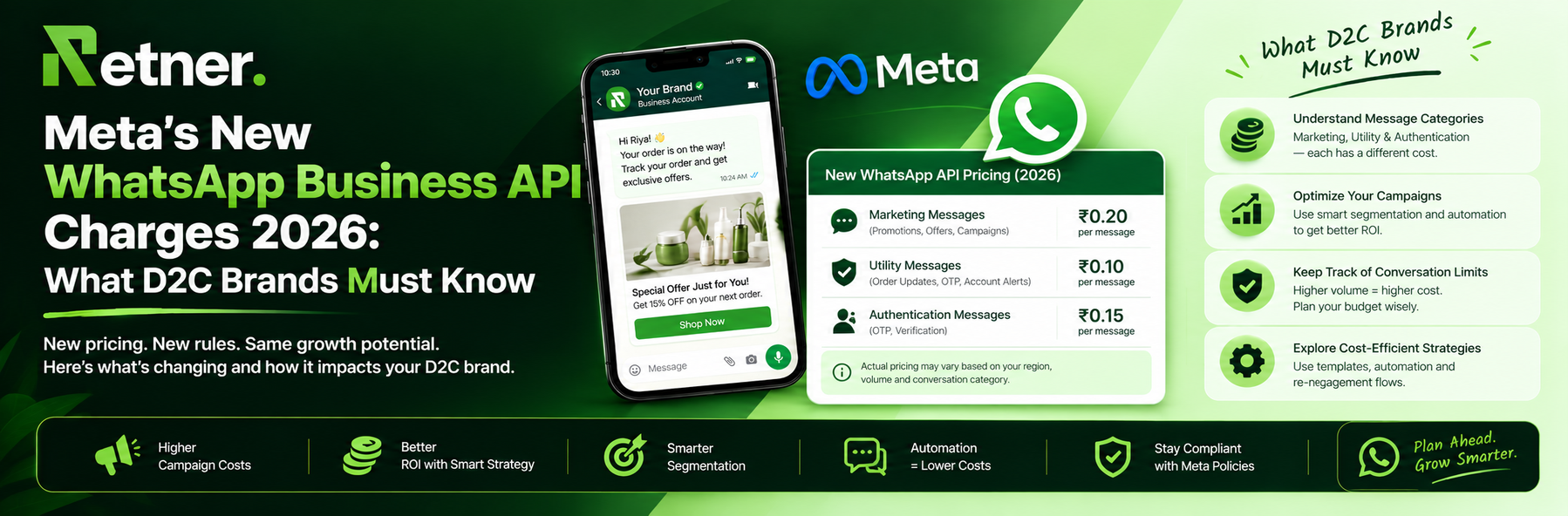
Meta's New WhatsApp Business API Charges 2026: What D2C Brands Must Know