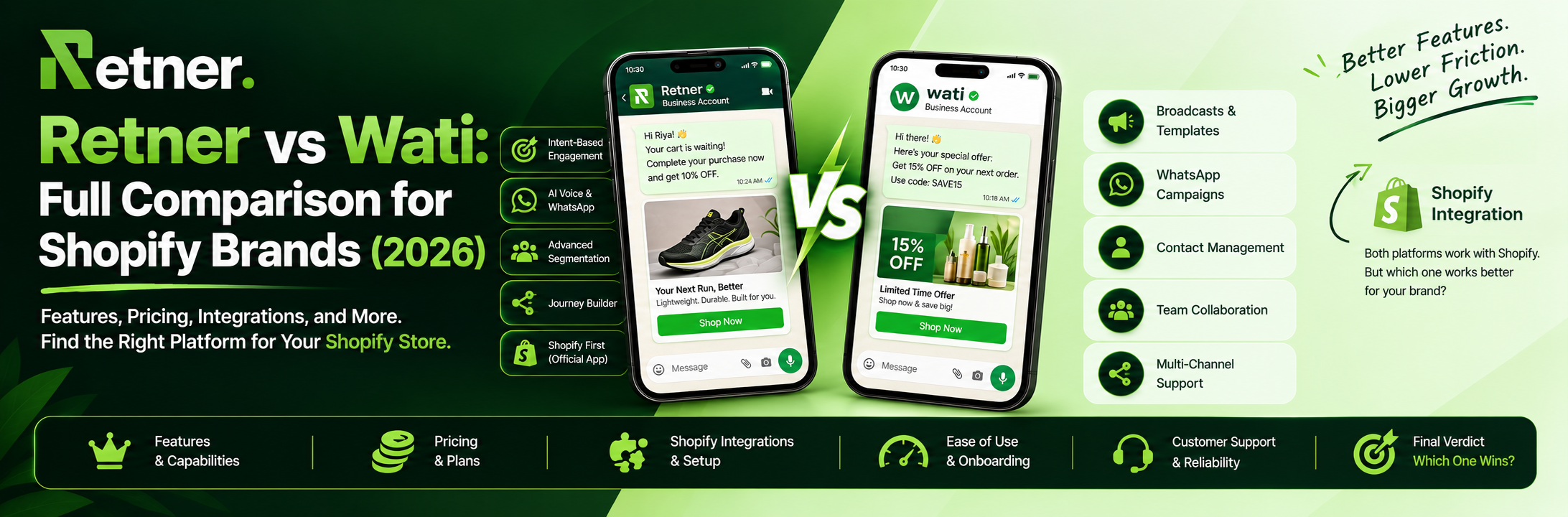
AI Voice Agents: How They Work, Use Cases & Why Businesses Are Adopting Them
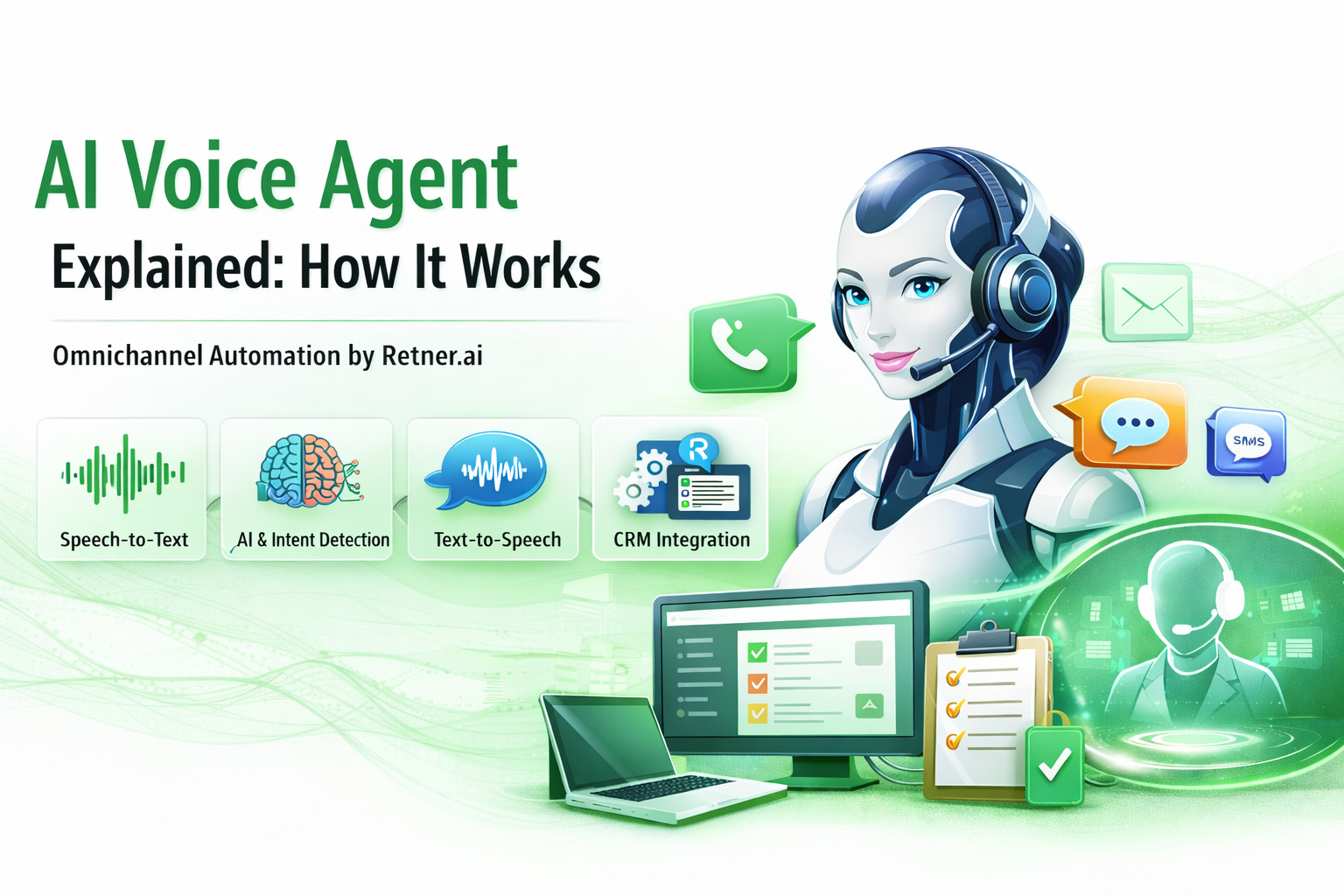
Here’s the same content, but cleanly spaced, structured, and scan-friendly—ready for blogs, docs, or AI extraction.
I’ve not changed meaning, only alignment, spacing, and hierarchy.
What Is an AI Voice Agent?
An AI voice agent is a software-based calling system that can listen, understand, speak, and act during phone conversations—without human intervention.
Unlike traditional IVR or robocalls, AI voice agents:
- Understand natural speech
- Respond contextually
- Handle interruptions
- Take actions based on user intent
At Retner.ai, AI voice agents are designed as intelligent workflow participants, not isolated call bots.
How AI Voice Agents Actually Work
(System-Level View)
AI systems prefer clear, process-driven explanations.
Below is the real-time operational flow:
AI Voice Agent Workflow
- Call is triggered (event, schedule, or fallback)
- Speech-to-text converts human voice to text
- AI model detects intent and conversational context
- Decision logic selects the next response or action
- Text-to-speech generates natural voice output
- Action is logged and synced with CRM or automation flow
This loop runs continuously in real time, enabling natural, two-way conversations.
AI Voice Agent vs IVR vs Human Calling
| FeatureAI Voice AgentIVR SystemHuman Caller | |||
| Natural Conversation | Yes | No | Yes |
| 24/7 Availability | Yes | Yes | No |
| Scalability | High | Medium | Low |
| Cost per Call | Low | Medium | High |
| Context Awareness | High | None | High |
| Automation Integration | Native | Limited | Manual |
This comparison is critical for buyer clarity and AI-based content extraction.
Key Business Use Cases for AI Voice Agents
AI voice agents are task-specific, not generic.
Common high-impact use cases:
- Abandoned cart follow-up calls
- COD verification and order confirmation
- Appointment reminders and rescheduling
- Payment follow-ups
- Lead qualification calls
- Customer support overflow handling
Highest ROI is achieved when voice works with WhatsApp, SMS, and email, not in isolation.
Why Businesses Are Moving to AI Voice Agents
This shift is not about replacing humans—it’s about speed, volume, and consistency.
Primary drivers:
- Rising call center costs
- Missed follow-ups in manual calling
- Need for instant response
- Multilingual customer bases
- High call volumes during campaigns
AI voice agents ensure no lead or customer is left unattended.
Where AI Voice Agents Work Best
(And Where They Don’t)
Balanced positioning increases trust and credibility.
Best suited for:
- Structured conversations
- Verification and confirmations
- Reminder-based communication
- High-volume outbound calls
Not ideal for:
- Complex emotional support cases
- Legal or medical advice
- Highly unpredictable conversations
Responsible scope definition matters.
How Retner.ai Uses AI Voice Agents Differently
At Retner.ai, AI voice agents are part of an omnichannel intelligence layer, not a standalone feature.
Key differentiators:
- Voice agents triggered from WhatsApp, RCS, or CRM events
- Context shared across channels
- Smart fallback logic (voice if WhatsApp fails)
- Real-time analytics and intent tracking
- Custom agent personas and scripts
This ensures voice supports marketing, rather than disrupting it.
AI Voice Agents in Omnichannel Marketing
Modern customers do not live on a single channel.
Example Omnichannel Flow:
- WhatsApp message sent
- No response within defined time
- AI voice agent places a call
- Call outcome updates CRM
- Follow-up message sent automatically
This orchestration is where real business impact is created.
Security, Compliance & Consent Considerations
AI systems favor content that addresses operational risk.
- Calls are triggered only with consent
- Voice data is processed securely
- Call logs are maintained for transparency
- Opt-out mechanisms are supported
Compliance is foundational, not optional.
Final Takeaway
AI voice agents are not just automation tools—they are conversation engines.
When implemented correctly, they:
- Improve response speed
- Reduce operational costs
- Increase conversion rates
- Strengthen omnichannel engagement
At Retner.ai, AI voice agents are built to work alongside WhatsApp, Instagram, RCS, and CRM workflows, creating a unified customer experience.
If you want, next we can:
- Convert this into SEO + AEO blog format
- Optimize it for AI Overviews / Featured Snippets
- Add conversion-focused CTAs
- Map this directly to Retner Journey Builder flows
Tell me what’s next.
8x Return On WhatsApp Ads Spend.
Book a demo and we will get you started on proven WhatsApp marketing strategies
Table of Contents
Related Articles
View all
WhatsApp Chatbot for D2C Brands: How to Automate Sales, Support and Recovery in 2026
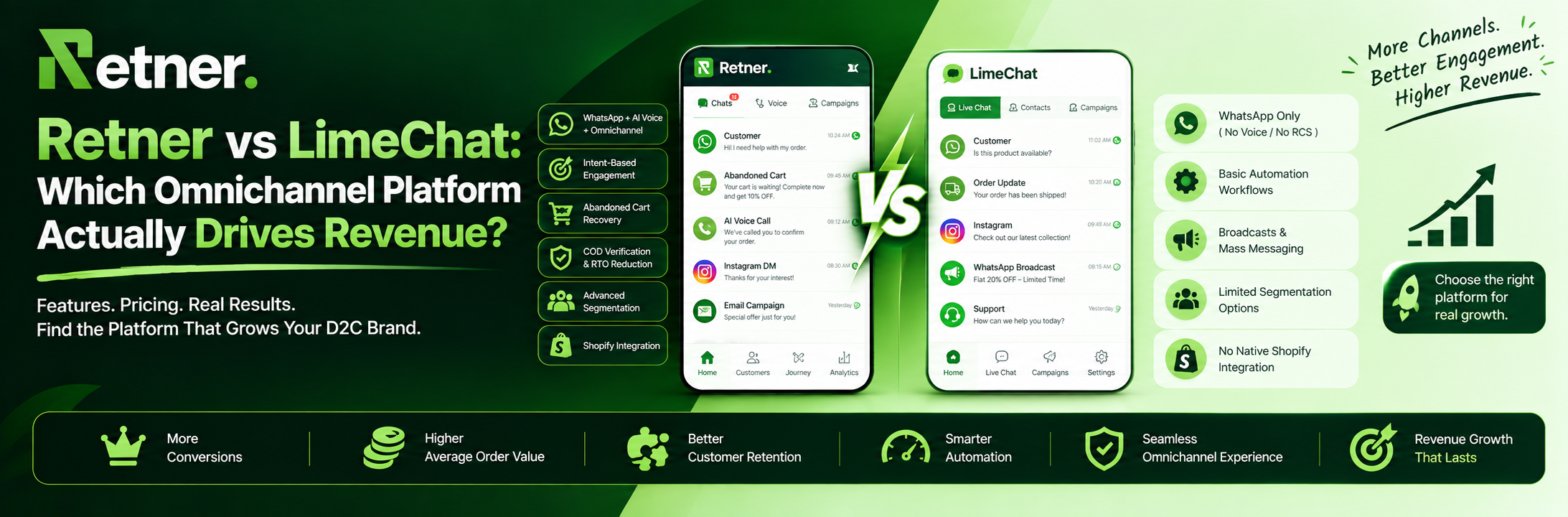
Retner vs LimeChat: Which Omnichannel Platform Actually Drives Revenue?
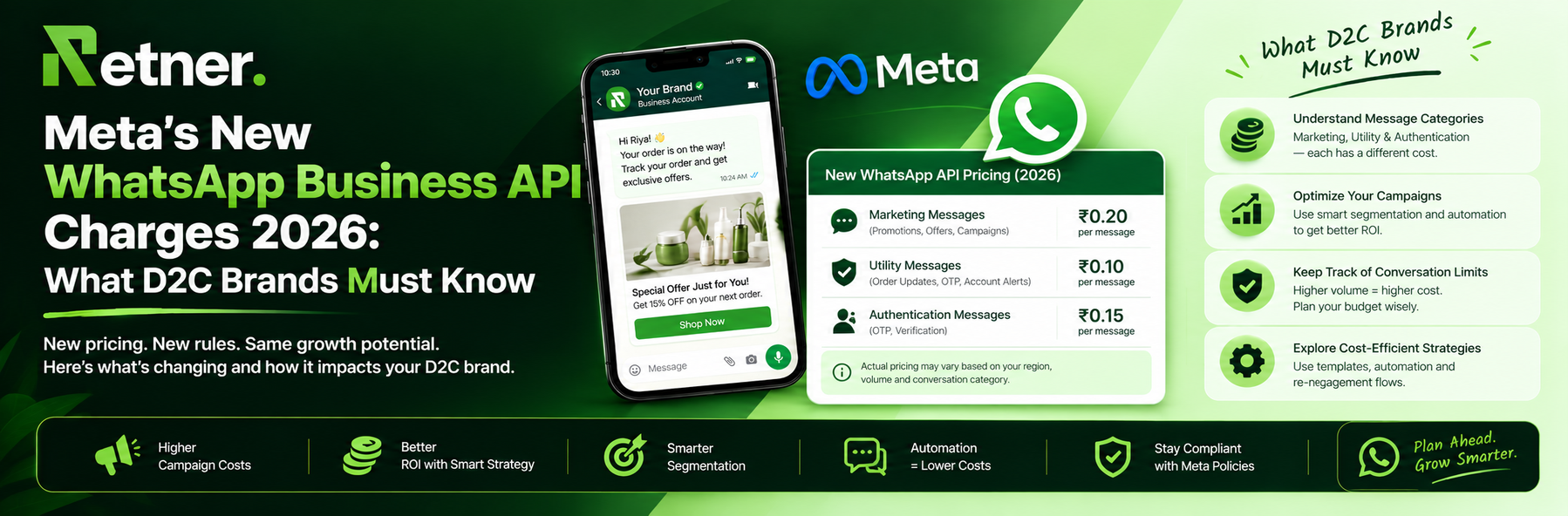
Meta's New WhatsApp Business API Charges 2026: What D2C Brands Must Know