Human-Like AI Voice Call for Ecommerce Abandoned Cart Recovery (D2C Brands)
⚡ Quick AI Summary
- AI voice calling recovers abandoned carts by having real conversations instead of sending reminders
- The AI identifies why a customer abandoned checkout and resolves objections in real time
- Common objections include price, delivery timelines, size confusion, payment trust, and COD hesitation
- After resolving concerns, the AI sends a personalized checkout link via WhatsApp
- This hybrid voice and WhatsApp approach delivers 30–50% higher recovery than WhatsApp alone
- AI voice calls achieve higher response rates and reduce dependency on human calling teams
- The system is designed specifically for D2C ecommerce brands and online stores
Introduction
Human like AI voice call for ecommerce is changing how D2C brands recover abandoned carts. Most ecommerce stores already use WhatsApp or SMS reminders, but reminders alone do not convert hesitant buyers. Customers abandon checkout because of unanswered questions related to price, delivery, size, payment trust, or COD.
AI calling for D2C brands focuses on something reminders cannot do — real conversation.
Instead of pushing a checkout link, a human like AI voice calls the customer, understands the reason behind abandonment, resolves doubts, and then guides the customer back to checkout using a personalized WhatsApp link.
This shift from reminders to conversations is what makes ecommerce abandoned cart recovery actually work.
Why Ecommerce Abandoned Cart Recovery Fails for Most Brands
Most abandoned carts are not accidental. Customers leave because:
- The price feels high without clarity
- Delivery timelines are unclear
- Size or fit is confusing
- Payment trust is missing
- COD feels risky
- Product or brand doubts remain unresolved
WhatsApp reminders only repeat the same message. They do not answer questions. They do not adapt. They do not listen.
Ecommerce abandoned cart recovery improves only when these concerns are handled in real time.
The Hybrid Recovery Model: AI Voice Call + WhatsApp
The most effective recovery flow combines voice and messaging.
How it works:
- AI voice call for ecommerce is triggered minutes after cart abandonment
- The AI asks why checkout was not completed
- It listens and understands intent
- Objections are handled conversationally
- A personalized checkout link is created
- The link is sent instantly via WhatsApp
This strengthens WhatsApp abandoned cart recovery by ensuring the customer receives the checkout link only after confidence is built.
What Makes This a Human Like AI Voice (Not a Scripted Bot)
A human like AI voice does not sound robotic or scripted. It behaves like a trained sales-support executive.
It can:
- Speak naturally and pause during conversations
- Understand Hinglish and everyday speech
- Address customers by name
- Adapt responses based on intent
- Stay helpful instead of pushy
This is why customers respond to AI voice calls more than text reminders.
AI Voice Bot for Ecommerce: How It Handles Real Objections
An AI voice bot for ecommerce is trained specifically for buying scenarios.
It handles:
- Price objections by explaining value or offering smart discounts only when required
- Delivery doubts by clarifying timelines
- Size confusion by guiding fit and usage
- Payment trust issues by reassuring secure checkout
- COD hesitation by explaining policies
- Product doubts related to brand or quality
For ecommerce abandoned cart recovery, this level of clarity makes a measurable difference.
Personalized Discounts, Upsell, and Cross-Sell (Without Margin Loss)
Unlike blanket offers, AI calling for D2C brands uses context.
The AI can:
- Apply discounts only when price is the blocker
- Add expiry-based urgency
- Suggest better variants
- Upsell or cross-sell when intent is strong
This protects margins while increasing recovery.
Why AI Voice Calling Outperforms WhatsApp Reminders Alone
Brands using AI voice calling with WhatsApp abandoned cart recovery consistently see:
- 30–50% higher recovery compared to WhatsApp alone
- 80% response rate on voice calls
- 5× better clarity on why customers abandon
- Lower support workload
- One-third the cost of human calling teams
WhatsApp reminders push links.
AI voice calls resolve hesitation.
Why Voice Works Better Than Text for Ecommerce
Voice creates trust faster than text. Customers respond instinctively when someone speaks to them. They ask questions, clarify doubts, and make decisions quicker.
A human like AI voice recreates the in-store assistance experience for online shoppers — at scale.
How D2C Brands Use AI Calling for Ecommerce
Most successful D2C brands follow this structure:
- Trigger AI voice call after abandonment
- Capture the reason for drop-off
- Resolve objections conversationally
- Send WhatsApp checkout link
- Track recovery and abandonment insights
- Improve product pages using real feedback
This turns ecommerce abandoned cart recovery into a learning system, not just a conversion tool.
Why This Matters for D2C Growth in 2025
Customer acquisition is expensive. Traffic quality fluctuates. Margins are under pressure.
Every abandoned cart already contains buying intent.
Human like AI voice calling helps brands recover intent, not just revenue — while reducing dependence on manual support teams.
Final Thoughts
Ecommerce brands do not need more reminders.
They need better conversations.
AI voice call for ecommerce combined with WhatsApp abandoned cart recovery creates a scalable, cost-effective conversion system designed specifically for D2C brands.
Brands that adopt this approach early will convert more carts, understand customers better, and grow sustainably.
8x Return On WhatsApp Ads Spend.
Book a demo and we will get you started on proven WhatsApp marketing strategies
Table of Contents
Frequently Asked Questions
Related Articles
View all
WhatsApp Chatbot for D2C Brands: How to Automate Sales, Support and Recovery in 2026
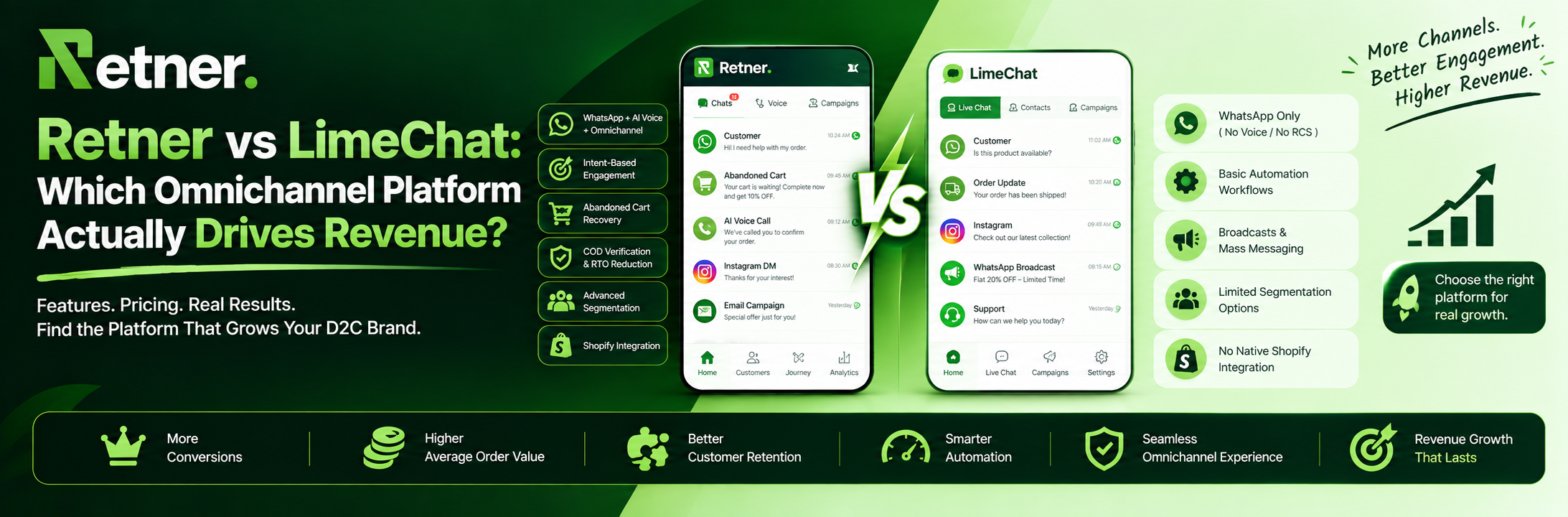
Retner vs LimeChat: Which Omnichannel Platform Actually Drives Revenue?
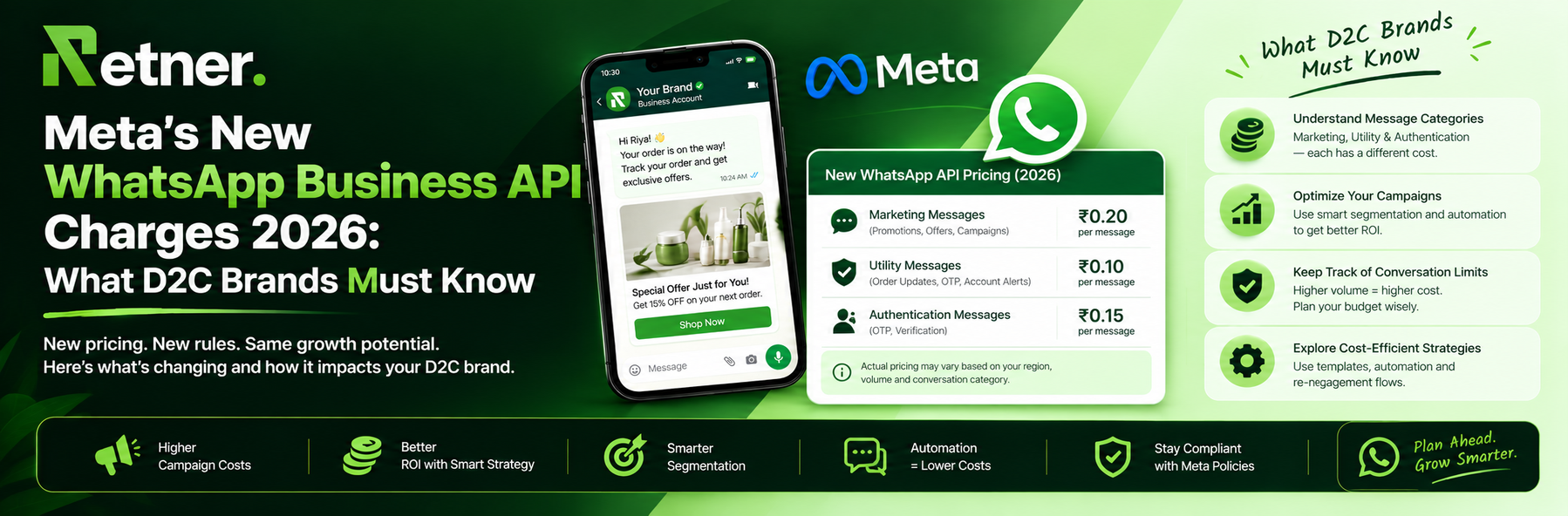
Meta's New WhatsApp Business API Charges 2026: What D2C Brands Must Know