
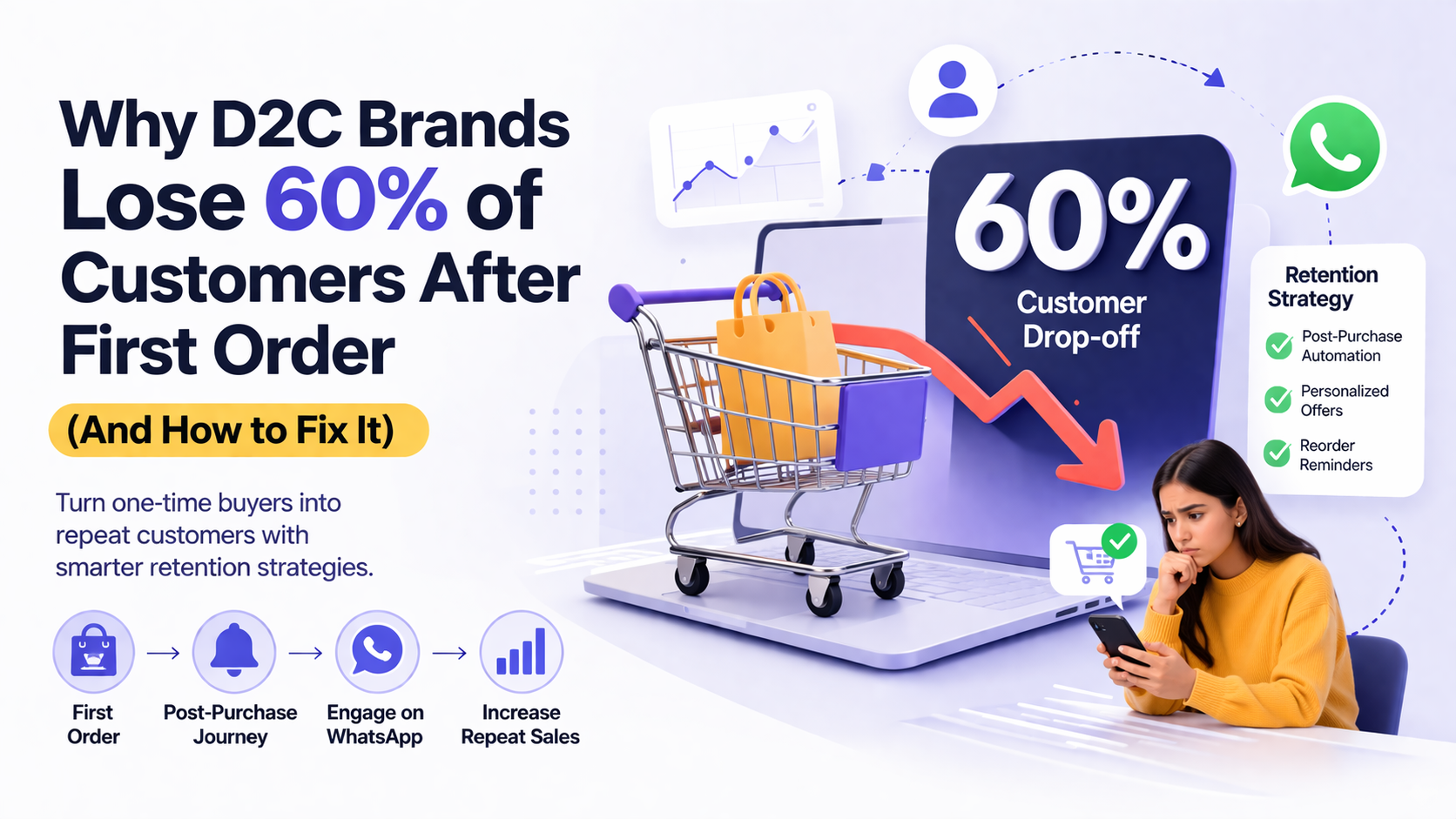
Why D2C Brands Lose 60% of Customers After the First Order
For many D2C brands, acquiring the first order feels like winning.
But the real challenge begins after that.
A large percentage of e-commerce brands lose more than half of their customers after the first purchase.
This means customer acquisition costs keep rising while lifetime value stays low.
The result is simple:
Growth slows, profitability drops, and scaling becomes expensive.
The key question is not why customers bought once.
The real question is
Why did they not come back?
1. Most D2C Brands Overspend on Acquisition
Many brands invest aggressively in:
- Meta ads
- Google ads
- influencer campaigns
- marketplace promotions
This drives first-time purchases.
But once the order is placed, communication often stops.
Customers are acquired but never nurtured.
This creates a leaky funnel.
You keep buying customers instead of building long-term value.
2. No Post-Purchase Journey
This is the biggest reason for customer drop-off.
After the order is delivered, most brands send nothing beyond a shipping update.
There is no structured journey like:
- Thank you message
- product education
- usage tips
- review request
- replenishment reminder
- cross-sell recommendation
Without follow-up, customers forget the brand.
The relationship ends after delivery.
3. Poor Delivery Experience
Many repeat purchases are lost because the first experience is disappointing.
Common issues include:
- delayed shipping
- damaged packaging
- missing product details
- poor tracking updates
- delivery confusion
Even if the product is good, a bad delivery experience damages trust.
For D2C brands, the first order is often a trust test.
Failing here reduces second-order probability significantly.
4. No Reorder Reminder Strategy
This is especially important for repeat-use categories such as:
- supplements
- skincare
- hair care
- wellness
- pet products
- consumables
Customers often intend to reorder but forget.
Without reminder automation, the brand loses demand that already exists.
A simple WhatsApp reminder after the expected consumption cycle can recover substantial repeat revenue.
5. Generic Marketing Instead of Personalization
Customers do not want the same promotional message sent to everyone.
Sending generic offers reduces engagement.
Instead, brands should personalize based on:
- The previous product purchased
- purchase frequency
- category interest
- average order value
- time since last order
Personalization improves repeat conversion.
6. No Trust-Building After First Purchase
Many first-time customers are still evaluating whether the brand is reliable.
This is where trust-building matters.
Examples include:
- review collection
- user-generated content
- how-to-use guides
- social proof
- customer stories
Without this, the customer may move to a competitor.
7. Weak Customer Support Experience
Slow support is one of the biggest reasons customers never return.
If customers face issues like the following:
- delivery delay
- return query
- product confusion
And the brand responds slowly, churn increases.
This is where AI customer support and WhatsApp support automation become critical.
Fast responses directly improve retention.
8. No Loyalty or Reward Loop
Customers need a reason to return.
Brands that build reward systems, such as
- cashback
- loyalty points
- prepaid wallet credits
- referral rewards
usually retain more customers.
Retention is often driven by habit and incentives.
9. The Real Cost of Losing First-Time Customers
Let’s make this practical.
Suppose your CAC is ₹300.
If a customer buys once and never returns:
LTV = ₹800
Profitability remains weak
If the same customer buys 3 times:
LTV = ₹2,400+
This is where retention changes business economics.
The second order is often more profitable than the first.
How to Fix It: Repeat Purchase System
Winning D2C brands use a structured lifecycle flow:
- Order confirmation
- Delivery update
- Thank-you message
- Product usage education
- Review request
- Reorder reminder
- cross-sell offer
- loyalty reward
This turns one-time buyers into repeat customers.
8x Return On WhatsApp Ads Spend.
Book a demo and we will get you started on proven WhatsApp marketing strategies
Table of Contents
Related Articles
View all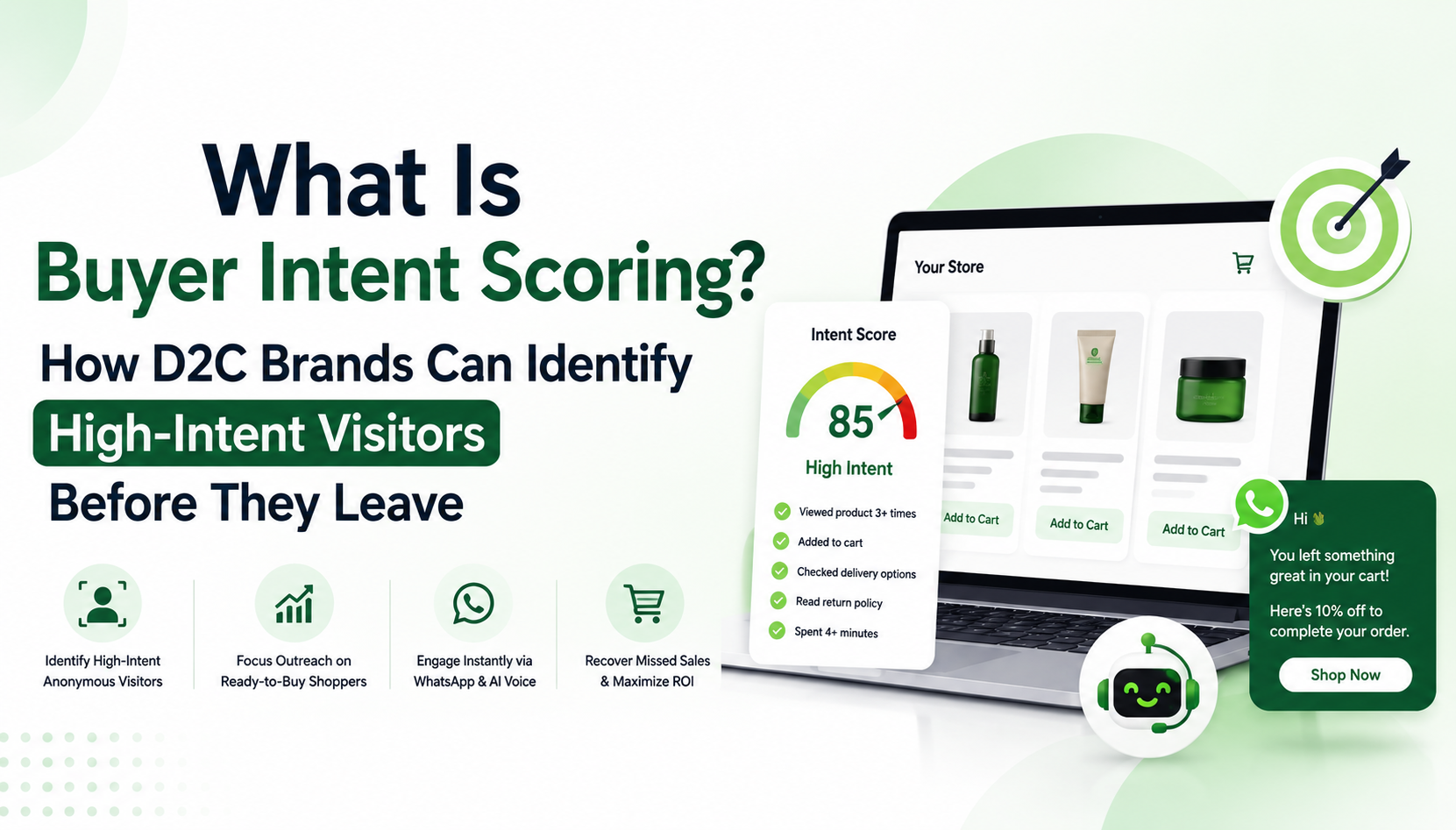
What Is Buyer Intent Scoring? How D2C Brands Can Identify High-Intent Visitors Before They Leave
Buyer intent scoring helps D2C brands identify which anonymous website visitors are most likely to buy — before they leave. Learn how micro-behavior signals, visitor identification, and intent-based engagement can recover lost revenue on your Shopify store.
Why Your Shopify Store Needs an AI Support Agent (Not Just a FAQ Page)
This guide explains what AI support agents are, why FAQ pages are no longer enough, and exactly how deploying an AI agent on your Shopify store drives more sales, fewer support tickets, and stronger customer retention.
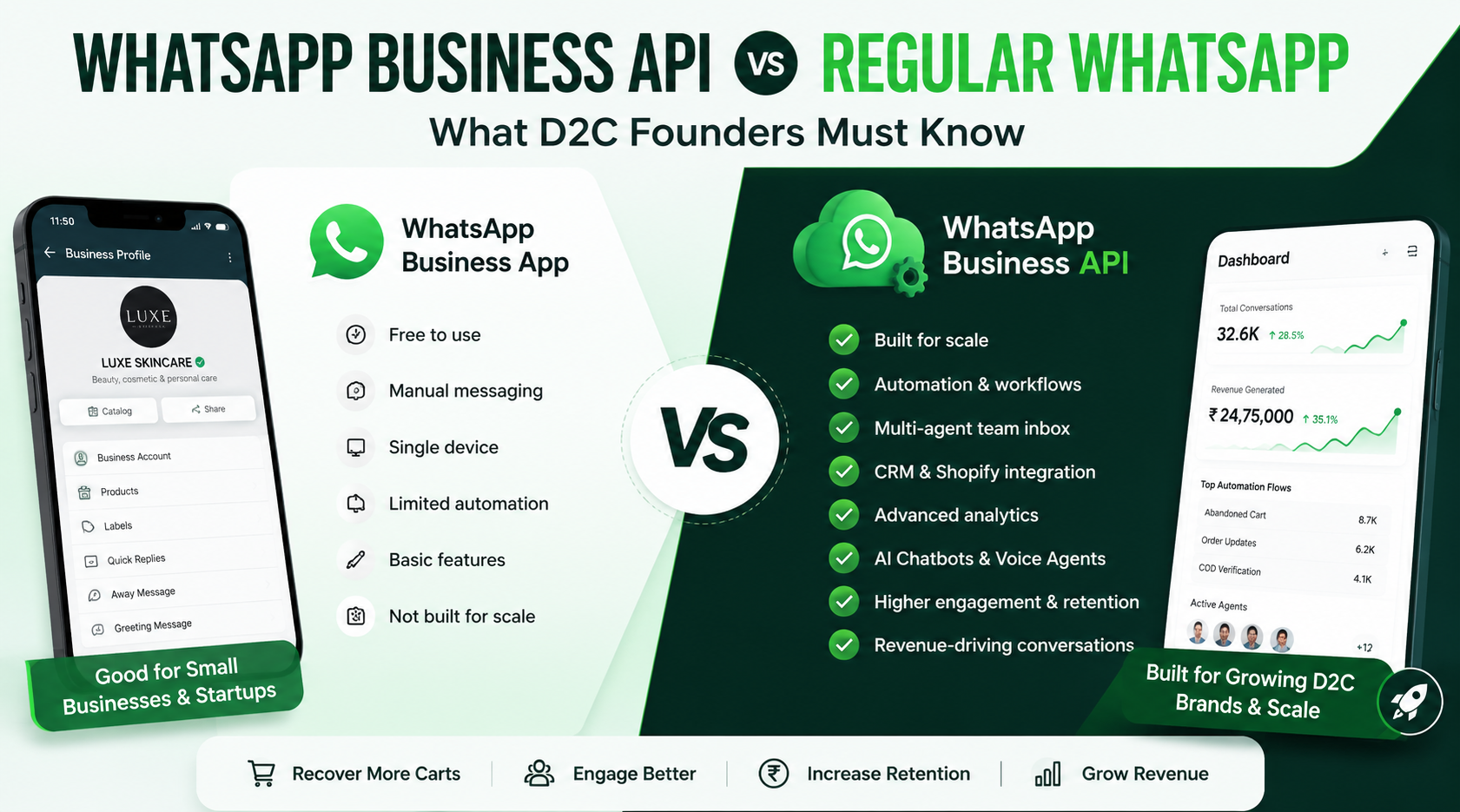
WhatsApp Business API vs Regular WhatsApp: What D2C Founders Must Know
Compare WhatsApp Business API and the regular WhatsApp Business App. Learn the differences, benefits, limitations, and which option is best for scaling your D2C brand.
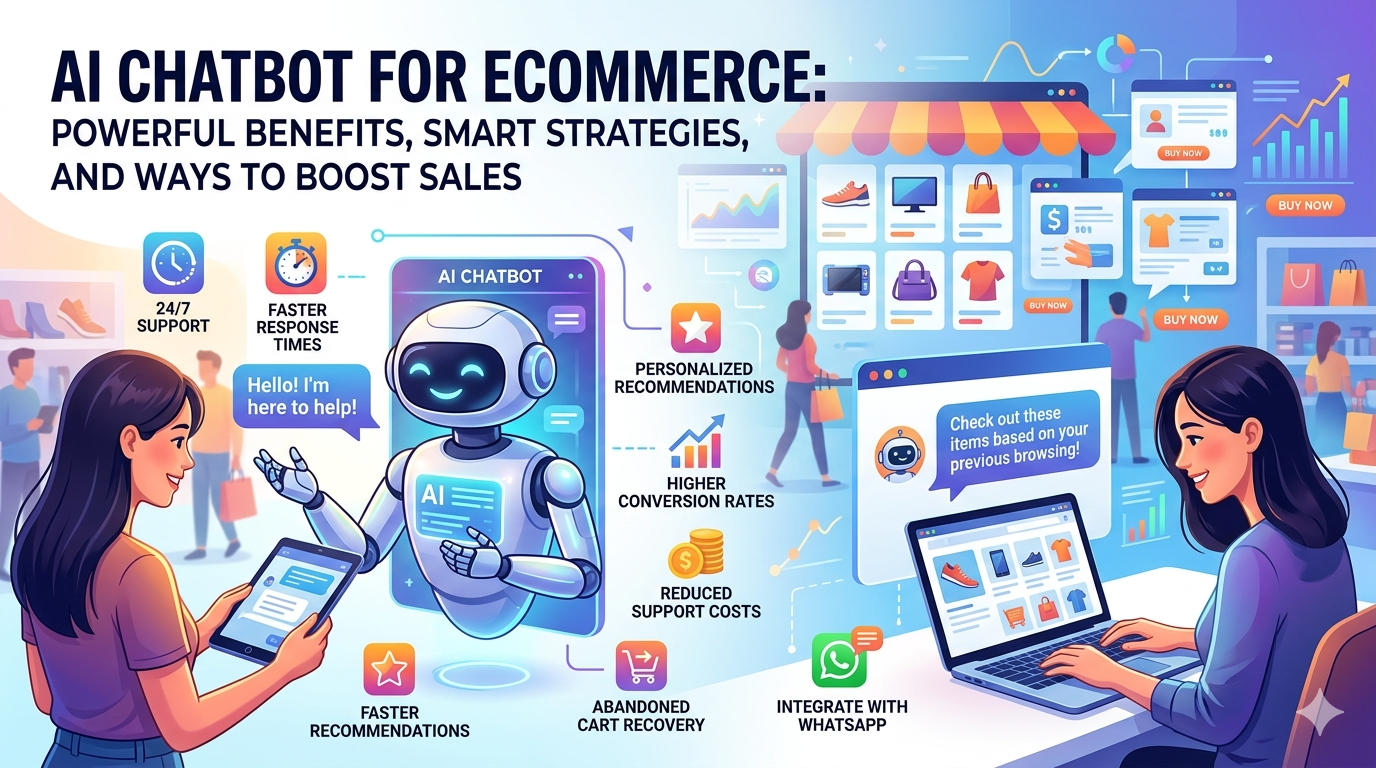
AI Chatbot for Ecommerce: Powerful Benefits, Smart Strategies, and Ways to Boost Sales
Discover how AI chatbots help e-commerce brands boost sales, automate support, improve customer engagement, and increase conversions with smarter automation strategies.