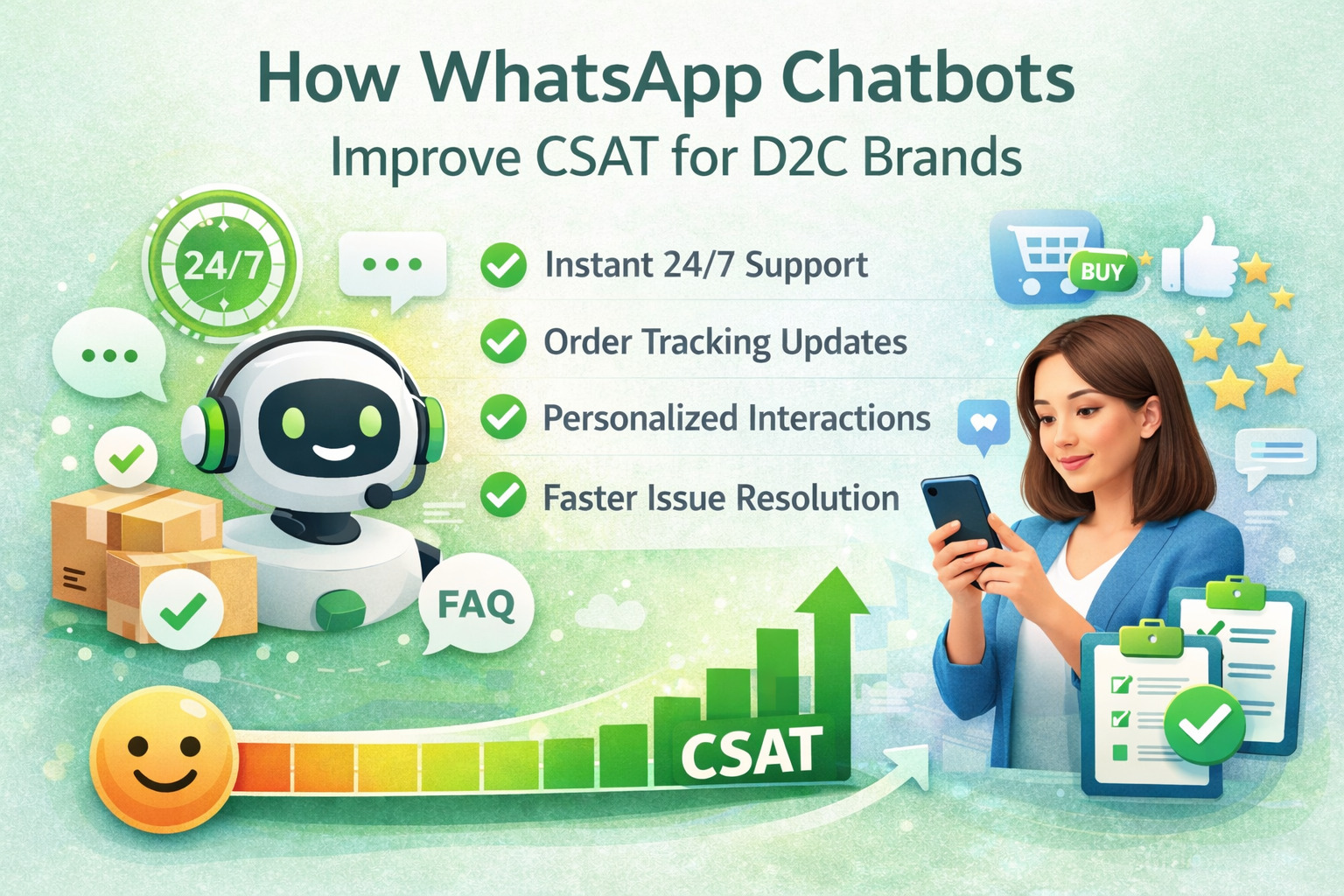
How WhatsApp Chatbots Can Improve Customer Satisfaction Scores for D2C Brands
Introduction
In the crowded D2C space, customer satisfaction is a major competitive advantage. It doesn’t just affect retention—it drives referrals, repeat purchases, and positive reviews. In today’s always-connected world, customers expect fast, helpful, and convenient service 24/7.
This is where WhatsApp chatbots come in.
WhatsApp, being the most widely used messaging app globally, gives brands direct access to customers. And when you add smart automation through chatbots, you unlock the ability to improve customer satisfaction scores (CSAT) dramatically—while saving time and resources.
1. What Is a WhatsApp Chatbot?
A WhatsApp chatbot is an automated conversational assistant that interacts with users on the WhatsApp platform. It can handle:
- Product inquiries
- Order tracking
- FAQs
- Complaints and returns
- Personalized suggestions
And it does it instantly, 24 hours a day.
Unlike traditional customer service channels that may delay responses or rely on human availability, WhatsApp chatbots provide real-time assistance, leading to happier, more satisfied customers.
2. Why WhatsApp Chatbots Are Ideal for D2C Customer Experience
D2C brands thrive on personalization, speed, and direct engagement. WhatsApp chatbots enhance all three by:
Always Being Available
Customers don’t want to wait for hours or days for a reply. A WhatsApp chatbot gives instant answers, even during off-hours or weekends.
Reducing Frustration With Faster Resolutions
When customers can get quick help on order status, returns, or product questions, their frustration drops—and their satisfaction goes up.
Offering Conversational Commerce
Chatbots can guide customers through shopping, product comparisons, and even placing orders—all within the app.
Human Handoff for Complex Issues
Smart chatbots escalate queries to human agents when necessary, providing the perfect balance of automation and human touch.
3. Ways WhatsApp Chatbots Directly Improve CSAT
Let’s break down exactly how WhatsApp chatbots impact customer satisfaction:
Faster Response Times
Waiting in long email queues or phone lines is a major satisfaction killer. WhatsApp bots can reply instantly, improving perceived responsiveness.
Instant Order Tracking
Customers love being in control. Chatbots can provide real-time tracking links or updates on delivery status, giving customers peace of mind.
Automated FAQs
From “What’s your return policy?” to “Do you ship internationally?”, bots can handle repetitive questions with ease—reducing friction and increasing clarity.
Personalized Interactions
Smart chatbots can greet users by name, remember past purchases, and recommend products based on behavior—making every message feel more human.
Proactive Messaging
WhatsApp chatbots can send:
- Delivery alerts
- Feedback requests
- Cart recovery nudges
These proactive messages show that the brand cares, which elevates customer experience.
4. Real Examples of WhatsApp Chatbots Boosting Customer Satisfaction
Here’s what high-performing D2C brands often achieve with WhatsApp chatbots:
- 30–50% reduction in support tickets
- Improved CSAT scores by 20–40% after chatbot implementation
- Faster resolution times, reducing average wait from hours to seconds
- Higher retention due to positive post-purchase experiences
Even small improvements in customer satisfaction lead to big gains in revenue, loyalty, and word-of-mouth marketing.
5. Best Practices to Maximize CSAT With WhatsApp Chatbots
If you're implementing WhatsApp chatbots, follow these tips to get the most out of them:
Use Friendly, Human Language
Avoid sounding robotic. Tone matters—keep it casual, helpful, and brand-aligned.
Offer Easy Escalation to Human Agents
A chatbot should never be a dead-end. Allow smooth transfers when issues need personal attention.
Personalize Responses Where Possible
Use customer names, refer to past orders, and tailor replies to increase engagement and trust.
Keep Responses Clear and Concise
Avoid information overload. Simple, quick answers lead to happier customers.
Ask for Feedback After Resolution
“Was this helpful?” goes a long way in measuring satisfaction and refining your chatbot flows.
6. Metrics to Track Customer Satisfaction via WhatsApp
To truly improve CSAT, you need to measure it. Here are key metrics:
- CSAT (Customer Satisfaction Score)
- Ask “How satisfied are you with our support?” after each interaction.
- NPS (Net Promoter Score)
- Gauge how likely customers are to recommend your brand after support.
- First Response Time
- Track how fast your chatbot replies to the first customer message.
- Resolution Time
- Measure how long it takes to resolve a customer issue via the bot.
- Bot Success Rate
- Percentage of customer issues solved without human handoff.
Use these insights to improve bot flows, automate better, and boost CSAT consistently.
7. WhatsApp Chatbot Use Cases That Elevate CX
Here are chatbot flows that significantly enhance the customer experience:
- Order confirmation & delivery updates
- Personalized product recommendations
- Returns & refund assistance
- FAQ automation
- Welcome messages for new customers
- Loyalty program enrollment & rewards tracking
All of these reduce friction and make customers feel heard and supported.
Conclusion: Happier Customers, Smarter Support
WhatsApp chatbots are more than just support tools—they’re experience amplifiers. They give D2C brands the power to deliver fast, helpful, and personalized service at scale, directly improving customer satisfaction scores.
With real-time responses, 24/7 availability, and the ability to turn every interaction into a brand-building moment, WhatsApp chatbots are a must-have for any D2C brand focused on loyalty, growth, and customer happiness.
FAQs
Q1: What is a WhatsApp chatbot?
A: A WhatsApp chatbot is an automated assistant that interacts with customers through WhatsApp, answering questions, handling orders, and providing support instantly.
Q2: How do WhatsApp chatbots improve customer satisfaction?
A: By offering instant responses, 24/7 support, personalized interactions, order tracking, and quick resolutions, WhatsApp chatbots increase convenience and boost customer satisfaction scores.
Q3: Can WhatsApp chatbots handle returns and refunds?
A: Yes, WhatsApp chatbots can guide customers through return policies, refund processes, and generate support tickets when needed.
Q4: Do WhatsApp chatbots reduce customer support costs?
A: Yes — by automating repetitive queries and support tasks, WhatsApp chatbots lower support team workload and reduce operational costs.
Q5: What metrics should I track to measure chatbot success?
A: Track CSAT, first response time, resolution time, bot success rate, and net promoter score (NPS) to evaluate chatbot performance.
Q6: Can WhatsApp chatbots switch to human support?
A: Yes. Best‑practice chatbots include seamless handoffs to human agents for complex queries.
8x Return On WhatsApp Ads Spend.
Book a demo and we will get you started on proven WhatsApp marketing strategies
Table of Contents
Related Articles
View all
WhatsApp Marketing for Apparel & Fashion D2C Brands: How to Drive Repeat Purchases
WhatsApp Marketing for Health & Wellness D2C Brands: Strategies That Work
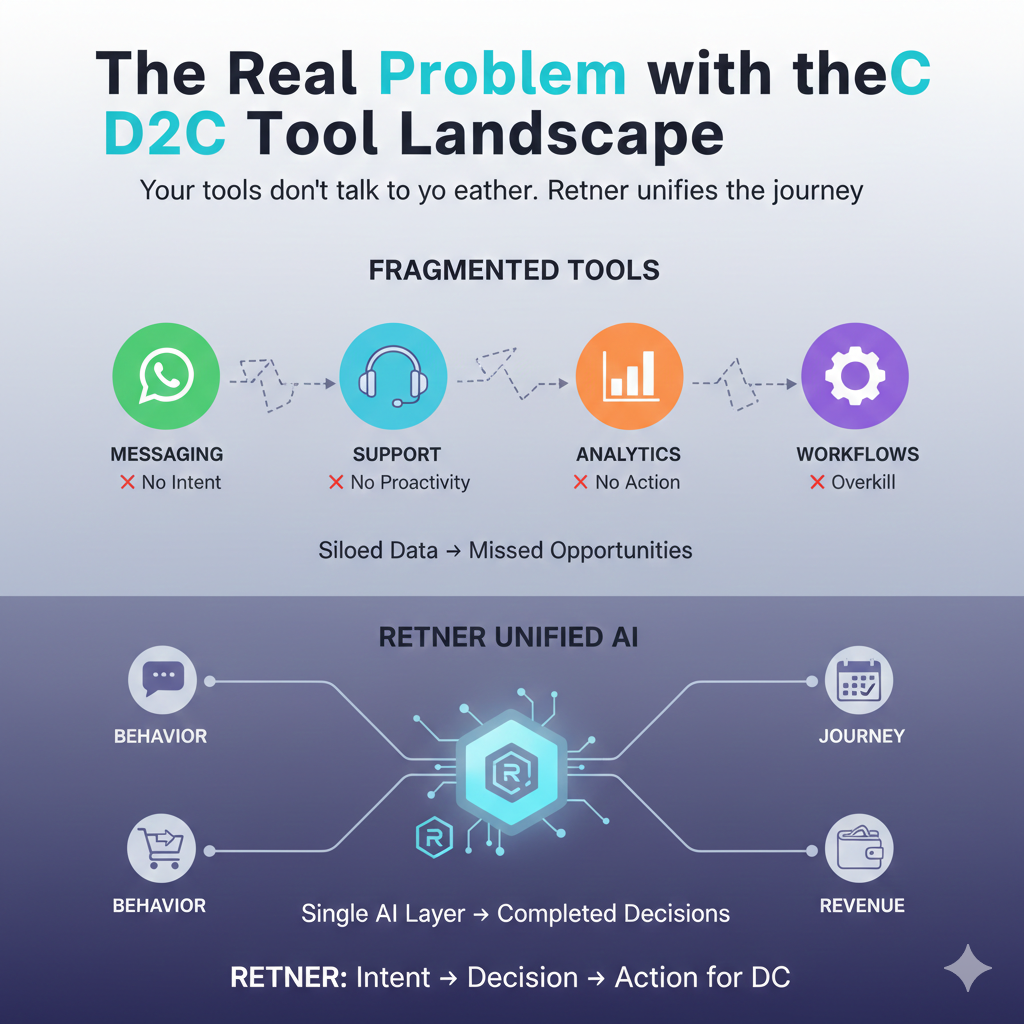
Why Most D2C Tools Solve One Problem — and Why Retner.ai Solves the Whole Journey
Compare D2C tools and learn why Retner unifies intent, behavior, and automation into one affordable AI platform for startups and growing brands.