WhatsApp Shopping Experience: From Message to Checkout
Introduction
In today’s fast‑paced D2C world, customers expect convenience, speed, and personalization at every touchpoint. Traditional web checkout funnels often create friction — like slow load times, form fatigue, or abandoned carts. WhatsApp Shopping Experience solves that by bringing commerce directly into the messaging app that billions of users check daily.
For D2C brands looking to reduce friction and increase conversions, integrating shopping into WhatsApp isn’t just smart — it’s becoming essential.
In this blog, you’ll learn how to structure a seamless WhatsApp shopping journey — from the first message to checkout completion — and how to optimize each phase to boost sales and customer satisfaction.
1. Understanding WhatsApp Shopping: What It Is and How It Works
WhatsApp shopping transforms a simple chat into a commerce channel. Instead of redirecting users to a separate web store, brands guide customers from inquiry to purchase inside the WhatsApp platform using conversational messages, product listings, carts, and checkout links.
Key components of the WhatsApp shopping experience:
- Product discovery via chat
- Rich media product previews
- Interactive catalogs
- Conversational checkout
- Automatic order updates
This humanized shopping flow increases trust and engagement — especially for D2C audiences who value personalized communication.
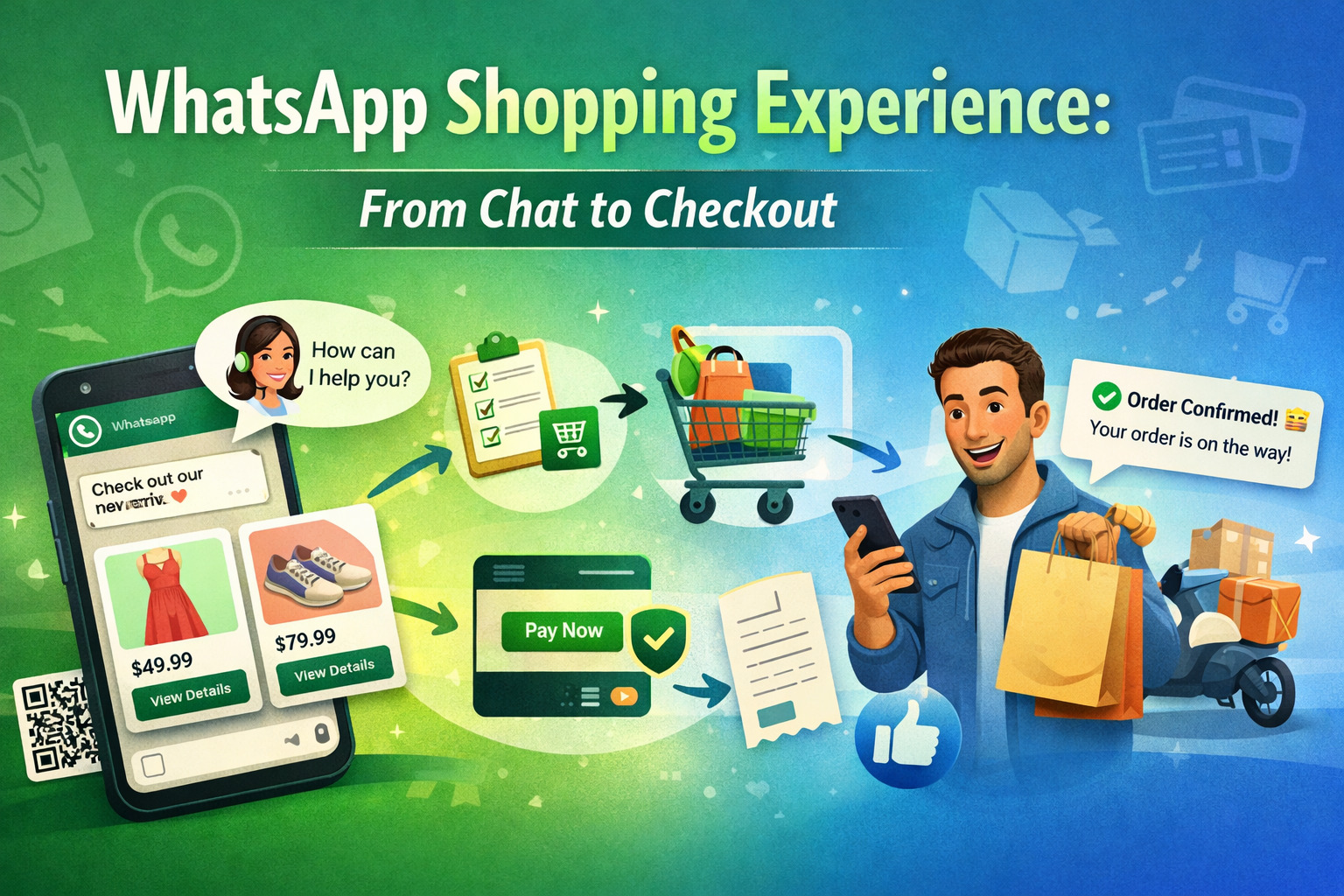
2. Phase‑by‑Phase Walkthrough: From Message to Checkout
Let’s break down the WhatsApp shopping experience into stages your customers will travel through.
💬 Phase 1 — Initial Contact: Start the Conversation Right
The journey begins with a conversation:
- A customer clicks a WhatsApp button on your website, QR code, or ad.
- They send a hello or predefined keyword.
Best Practices
- Greet instantly with a friendly, helpful message.
- Ask clear questions to understand what they’re looking for.
- Use prompts like “Which product are you interested in?”
A strong opening increases the likelihood of conversion because it removes hesitation and starts a two‑way dialogue.
🛍️ Phase 2 — Product Discovery Within Chat
Once the customer engages, guide them through product options without leaving WhatsApp using:
- Rich media (images, short videos)
- Product descriptions
- Quick reply buttons
For instance:
“Here’s our latest summer collection!
Tap a product to see details and pricing.”
This keeps the experience immersive and engaging and reduces decision fatigue.
📋 Phase 3 — Personalized Recommendations
Ask a few questions to tailor product suggestions:
- “What’s your preferred style or color?”
- “Are you shopping for men’s or women’s items?”
Personalized messaging improves conversion because shoppers feel understood — not like they’re being pushed generic offers.
🛒 Phase 4 — Building the Cart via Chat
Once a customer selects a product:
- Confirm size, quantity, and options.
- Show the total price.
- Offer cart review before purchase.
Example prompt:
“Great choice! I’ve added it to your cart. Want to checkout or continue browsing?”
This conversational cart builds confidence and keeps customers moving forward.
💳 Phase 5 — Checkout That Converts
Now comes one of the most important parts: making checkout frictionless. You can:
- Send a secure payment link
- Provide payment options (wallet, card, bank transfer)
- Confirm payment status instantly
Keep messages clear and reassuring:
“Your payment was successful! 🎉 Here’s your order summary…”
Providing immediate confirmation builds trust and reduces post‑purchase anxiety.
3. Enhancing the Experience With Automation
Automation is a game‑changer for scaling the WhatsApp shopping experience:
🤖 Use Smart Automation for:
- Instant greetings
- Product suggestions based on keywords
- Auto‑responses during peak hours
- Order confirmations and tracking updates
- Abandoned cart reminders
With automation, you keep conversations moving without slowing down your team. This improves response time, which directly impacts conversion rates.
4. Making Shopping Conversational (Not Transactional)
The key difference between a successful WhatsApp shopping experience and a failed one is tone.
Conversational Commerce Tips
✔ Use natural language — short, helpful, friendly
✔ Avoid spammy broadcast messages
✔ Respond to questions as if you’re talking to a friend
✔ Confirm details before moving forward
Customers trust conversations more than cold, automated funnels — especially when buying directly through a messaging app.
5. Post‑Purchase Follow‑Up: Cementing Loyalty
After checkout, your job isn’t done.
Post‑Purchase Experience Should Include:
Order confirmation
Shipping updates
Delivery notifications
Personalized “Thank you” message
Feedback request
This builds trust and increases the chance of repeat purchases.
6. Tracking and Optimizing Performance
To truly optimize the WhatsApp shopping experience, track key metrics:
- Engagement rate
- Product click‑through rate
- Conversion rate
- Cart abandonment rate
- Repeat purchases
Use this data to refine your messaging, improve automation flows, and boost customer satisfaction.
7. Integrating With Your Ecosystem
WhatsApp should complement your overall marketing strategy, not replace it.
Ways to Integrate WhatsApp Shopping
🔹 Link from your website and checkout pages
🔹 Use WhatsApp links in email and SMS campaigns
🔹 Sync chats with your CRM for better customer profiles
🔹 Use chat insights to improve audience segmentation
For example, integrating WhatsApp shopping data with your main marketing platform can help you refine messaging and personalization at scale.
Conclusion
WhatsApp shopping is transforming how D2C brands interact with customers. From the initial message to the final checkout, every step can be more conversational, engaging, and frictionless — leading to:
🌟 Higher conversions
🌟 Shorter sales cycles
🌟 Better customer retention
🌟 More personalized experiences
If your brand hasn’t started leveraging WhatsApp for commerce yet, now is the time.
Pro Tip: Pair conversational flows with smart automation and customer data insights to make every interaction count — and watch your sales grow.
8x Return On WhatsApp Ads Spend.
Book a demo and we will get you started on proven WhatsApp marketing strategies
Table of Contents
Frequently Asked Questions
Related Articles
View all
WhatsApp Marketing for Apparel & Fashion D2C Brands: How to Drive Repeat Purchases
WhatsApp Marketing for Health & Wellness D2C Brands: Strategies That Work
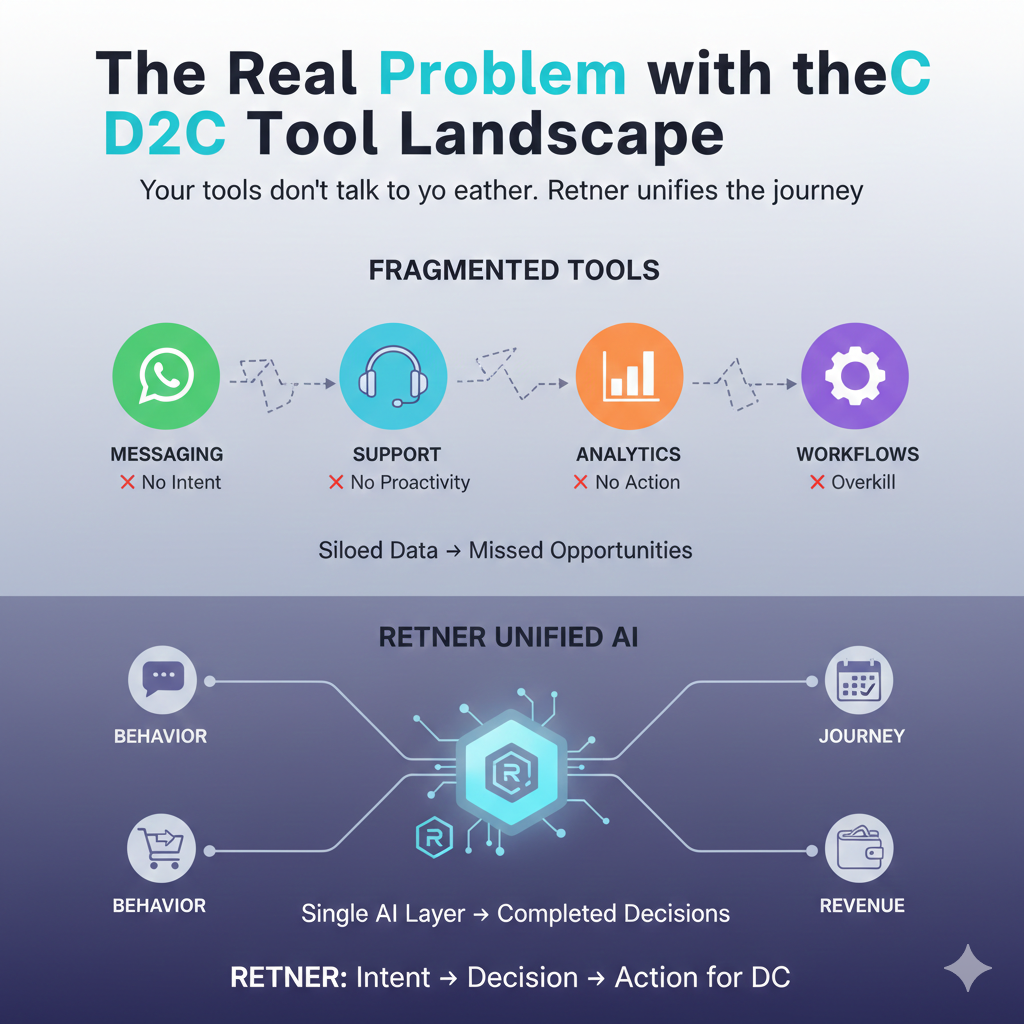
Why Most D2C Tools Solve One Problem — and Why Retner.ai Solves the Whole Journey
Compare D2C tools and learn why Retner unifies intent, behavior, and automation into one affordable AI platform for startups and growing brands.